









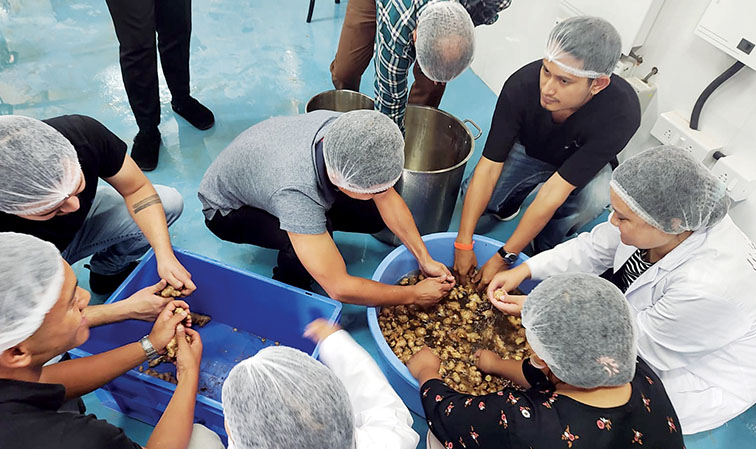
The Indian alcobev industry is undergoing a fundamental shift as consumers move away from a mass-market product in favor of artisanal, origin-linked beverages. While domestic wine production has historically been centered in Maharashtra’s grape-growing regions, a significant strategic pivot is now emerging from the Meghalaya plateau.
The establishment of the Northeast Fruit Wine Incubation Centre (NEFWIC) at IIHM – Shillong, a collaborative venture with the Meghalaya Food Processing and Export Promotion Council (MFEC), marks a critical evolution for the region. This initiative transitions the local industry from fragmented, small-scale cottage practices towards a structured, technology-driven manufacturing ecosystem designed to compete at a commercial scale.
Standardization, Stability, and Scale: The NEFWIC Production Framework
The transition from traditional, small batch brewing to a standardized commercial output requires a rigorous departure from the ‘home-brew’ narrative that has historically defined the region. NEFWIC operates as a model production unit where the focus has shifted towards achieving organoleptic profile consistency, ensuring that every bottle remains a predictable sensory experience. The facility manages a complex portfolio of indigenous feedstock, ranging from the high-acidity profiles of local pineapples to the delicate, tannin-sensitive structure of plums, pears, and strawberries.
Unlike the relatively standardized sugar-to-acid ratios found in traditional wine grapes, non-grapefruits present unique biochemical challenges. Achieving balance in these country wines requires advanced fermentation science to meticulously manage volatile acidity and ensure long-term phenolic stability. At NEFWIC, this process is governed by precision-engineered fermentation tanks that allow for the manipulation of thermal kinetics. By utilizing specific temperature-controlled cycles, winemakers can preserve volatile aromatic compounds.
The center’s technical mandate extends deeply into ABV optimization and the implementation of rigorous quality control protocols. Using automated bottling systems and scientific filtration, the risk of microbial spoilage is significantly mitigated-a critical factor for any product intended for a wider retail footprint. Winemakers at the center are encouraged to experiment with diverse yeast strains, selecting those that best complement the specific sugar profiles and enzymatic activities of indigenous fruits.
This commitment to scientific validation ensures that the final liquid is not merely a regional specialty but a product that conforms to both national and international food safety standards. By establishing this benchmark, NEFWIC provides the technical foundation necessary for commercial scalability, allowing local producers to move past the limitations of seasonal batches and enter the formal market with a stable, high-quality product that can withstand the rigors of distribution and shelf-life requirements.
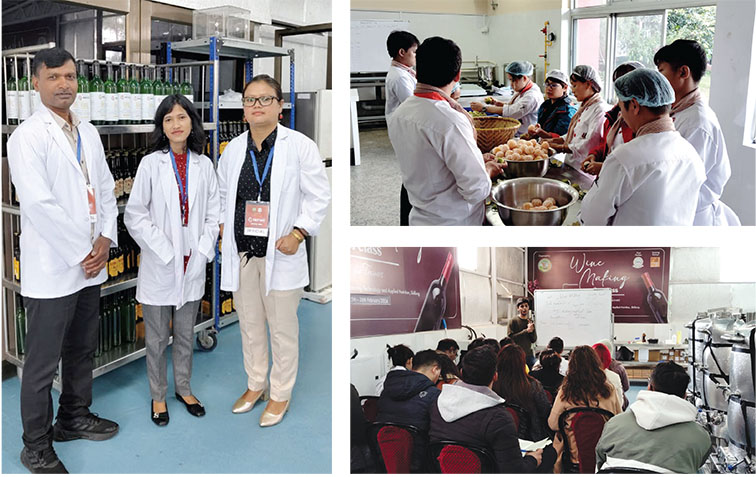
A relentless focus on science, quality and training
Positioning Meghalaya as India’s Fruit Wine Capital: The NEFWIC Vision
For the Government of Meghalaya, NEFWIC is a calculated move to bridge the gap between horticulture and high-value retail. By positioning the state as “India’s Fruit Wine Capital,” the initiative seeks to create regional geographic brand equity.
At the core of NEFWIC is a robust pedagogical framework designed to transform a traditional craft into a disciplined profession. Skill development acts as the fundamental pillar of this initiative, positioning the Centre as a critical practical training ground for both nascent and established winemakers throughout the Northeast. By moving beyond anecdotal brewing methods, NEFWIC offers structured winemaking and wine appreciation courses that emphasize the intersection of sensory art and chemical precision.
The curriculum is built around the realities of modern production, providing hands-on immersion in fermentation science, stringent quality control, and the mechanical nuances of commercial bottling. However, the scope of capacity building extends significantly beyond the laboratory. Recognizing that a superior liquid is only one half of a successful brand, the center provides vital exposure to the complexities of regulatory compliance, strategic branding, and high-impact packaging. By assisting the host community with the delicate task of fermentation balancing and professional bottling, NEFWIC is effectively elevating local producers to meet competitive commercial standards, ensuring that indigenous fruit wines can stand shoulder to shoulder with established international labels on any retail shelf.
Catalyzing a Multi-Sectoral Shift: NEFWIC and Meghalaya’s Fruit Wine Economy
The establishment of NEFWIC serves as a catalyst for a multi-sectoral economic shift, creating a symbiotic link between rural agriculture and urban hospitality. On the agriculture front, the center has stimulated an increase in demand for locally grown fruits, which in turn encourages Meghalaya’s farmers to diversify their crops and invest in higher production quality. This vertical integration ensures that the state’s horticulture, rich in pineapple, plum, and strawberry, finds a high-value outlet that is less susceptible to the price volatility of raw producer markets.
Beyond the orchard, the initiative serves as a primary driver for entrepreneurial development and job creation. The formalization of a fruit wine industry generates a significant ripple effect, opening specialized avenues in cold-chain logistics, food processing, marketing, and bespoke hospitality services. This transition is most visible in the emerging wine tourism sector. By framing Meghalaya as the hub for experimental travel, NEFWIC is tapping into a demographic of high-value tourists interested in vineyard-style engagement and indigenous culinary heritage, effectively diversifying the state’s traditional revenue system.
Looking ahead, the strategic ambition to establish Meghalaya as the “Fruit Wine Capital of India” depends entirely on this integrated ecosystem. Through the targeted induction of advanced technology and a persistent focus on skill upgradation, the center is converting the state’s natural produce and the potential of its youth into a viable economic powerhouse. NEFWIC is evolving beyond its role as a production unit; it is becoming a center for excellence and innovation that ensures Northeast fruit wine serves as a cornerstone for both regional branding and long-term economic resilience.