








You left a career in banking in Chicago to step into a 100-year-old family business. Looking back, what was the hardest mindset shift you had to make in that transition?
When I was a banker, decisions were about quarters and numbers. When I came back to MONIN in 1986, the company was losing money, and my father’s health was failing. The urgency was real, but I quickly understood that running a family business is not only about fixing financial statements but about protecting a name and legacy that will outlive you.
The biggest mindset shift was moving from short-term financial logic to long-term brand thinking. In banking, if something does not perform, you exit. In a family company, you constantly adjust, build and endure everything that comes your way. You think in decades, not quarters.
MONIN has grown from a French legacy brand into a truly global one. How do you personally decide what should stay unchanged as the brand scales, and what must evolve?
Certain things are non-negotiable: quality of ingredients, naturality, and respect for flavour authenticity. My grandfather’s motto: ‘La Passion de la Qualité’, still guides us. That does not change, no matter what.
What evolves is how we serve markets. Formats, flavour portfolios, local production, partnerships: these must adapt. As a global brand, we cannot be rigid. We protect the philosophy, but we adapt the expression.
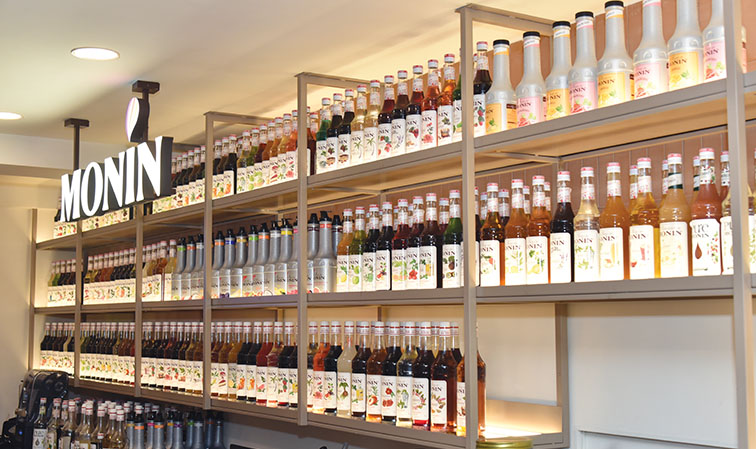
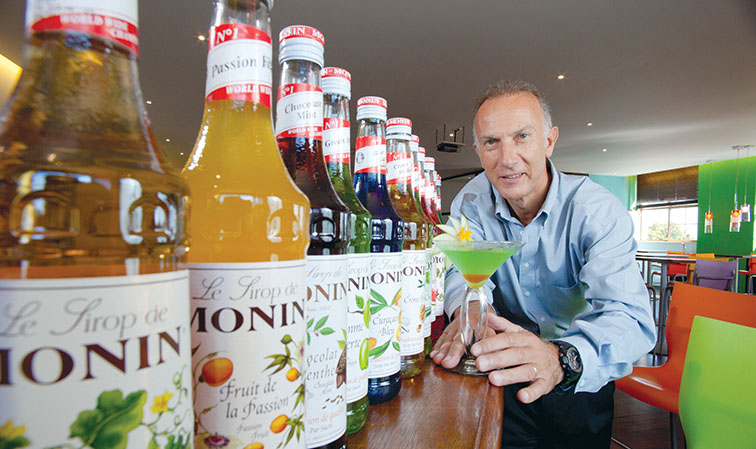
The Monin range
India has one of the most complex flavour palates in the world. What have been some unexpected learnings from adapting MONIN products to Indian tastes?
India is a fascinating market because its flavours the incredibly layered. Sweet, spicy, floral, acidic, sometimes all in a single sip! What we’ve learned is that familiarity and boldness coexist beautifully. There is deep respect for traditional tastes, but also a strong appetite for reinterpretation. That’s why we’ve invested time in truly understanding what Indians enjoy drinking and eating. Flavours like Spiced Jamun (kala khatta) and Raw Mango (aam panna) resonate because they’re nostalgic, yet exciting in a contemporary format.
Another important insight is the openness of Indian consumers to experimentation, particularly in cafés and bars. But openness does not mean compromise. Authenticity is essential. If you say mango, it must taste like real mango — not confectionery. That level of expectation challenges us to be even more precise in sourcing and formulation.
The move towards low- and no-added-sugar products is accelerating globally. With the PURE range, how do you balance health-forward choices without compromising flavour integrity?
There is a strong move towards low- and no-added-sugar products. For us, reducing sugar is not the real challenge; preserving flavour structure without it is. Sugar does far more than sweeten. It carries, builds texture, and gives a drink its body. With PURE, we had to rethink balance from the ground up. We worked extensively with fruit and plant-based extracts to create depth and roundness in flavour profiles without relying on artificial sweeteners or colourants. A health-forward product cannot mean a compromise on flavour integrity. If the taste is not exceptional, it simply does not launch.
PURE represents the next chapter of MONIN’s commitment to naturality. Available in Mint, Red Fruits, Green Apple, and Peach Apricot, we’ve designed the range to integrate well across cocktails, mocktails, iced teas, coffees, and desserts. It responds to a clear shift in India, where consumers are increasingly seeking transparency and more mindful choices, without sacrificing experience. PURE proves that you can build flavour responsibly, creatively, and without compromise.
Many brands talk about “naturality,” but executing it at scale is difficult. What were the biggest operational or R&D challenges MONIN faced while developing cleaner-label products?
Many brands speak about naturality but delivering it at scale is complex. The challenge is not simply removing artificial ingredients, but rebuilding the product so that taste, colour, texture, shelf life, and consistency remain intact.
Natural raw materials vary by harvest and origin, which means maintaining the same sensory experience across markets requires strong R&D, close supplier partnerships, strict quality control, and careful regulatory alignment. Sugar reduction adds another layer, as sugar contributes to structure and mouthfeel as well and not just sweetness. This development demands operational discipline and constant precision to ensure that premium quality and flavour integrity are never compromised.
MONIN works closely with bartenders, baristas, and chefs. How important is this creator ecosystem in shaping your product innovation today?
It is essential to us. Many of our best ideas have not come from a boardroom. They have come from conversations behind bars, inside cafés, and in restaurant kitchens. We stay close to bartenders, baristas, and chefs because innovation must begin with real needs. If a product does not make their work easier, more consistent, or more creative, it has no reason to exist.
MONIN Mojito Syrup, for example, was developed because bartenders needed consistency without relying on fresh mint, which loses intensity over time. Paragon was born from dialogue with highly demanding mixologists who wanted new tools to build complexity.
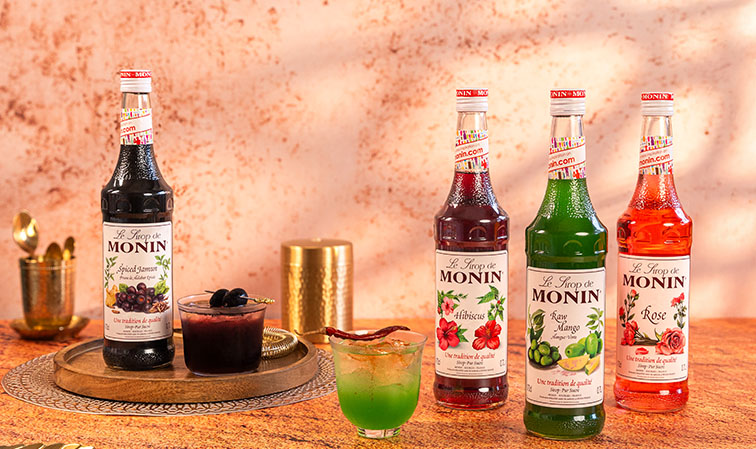
Tailoring products for the Indian market
MONIN’s tagline is “Life is a Creative Journey.” How does that philosophy show up in everyday decisions at the company, beyond product development?
Creativity for us is not only about flavours. It is about curiosity. When we enter a new country, we listen before we speak. When we build a factory, we do it to become part of the ecosystem, not just to sell into it. Even operationally, we encourage teams to experiment responsibly.
MONIN often says flavour is “never one size fits all.” When working across very different markets, how do you decide whether a flavour should be adapted locally or kept globally consistent?
If the fruit itself is universal, like vanilla or hazelnut, consistency is important. The expectation is global.
But when flavour is cultural, like jamun in India or cherry blossom in Japan, local R&D must lead the way. Each plant has autonomy to work on local profiles because taste memory is deeply regional. The art is knowing when to standardise and when to localise.
As a third-generation leader, what advice would you give to family-owned businesses trying to stay relevant in fast-changing global markets?
First, protect your core values. Without them, growth becomes fragile. Second, listen to your customers. Many of MONIN’s expansions came from simply observing what bartenders needed. And finally, be patient but courageous. When I returned in 1986, the company was on the verge of bankruptcy. We grew step by step, reinvesting what we earned. Sustainable growth is slower, but it lasts.