









Ingredients That Know Where They Come From is a three-part series that delves into the re-emergence of some Indian flavors in cocktails. This is not about trends or methods; it is about ingredients that carried significance before they even reached the upmarket bars of metro cities.
These articles are about familiarity. They are about ingredients that have been part of kitchens, backyard gatherings, and family lore, and are now making their way back into drinks in a quiet manner. Each article looks at this phenomenon from a different angle: memory, geography, and moderation.
This first article begins where most of these ingredients began, in the home.
There are flavors that you discover in your adult years. Someone introduces you to them, tells you what they are, where they come from, and how to use them. And then, of course, there are flavors that are always around. You cannot remember the first time you tasted them; they are just part of the lunches at home, the summer drinks that are not from a recipe, and the daily habits that did not need to be named.
In the last few years, some of these have made an appearance on the menus of select bars in India. You may not even notice them at first. Sometimes, it is halfway through a cocktail that you realize something tastes familiar and familiar in a surprising way.
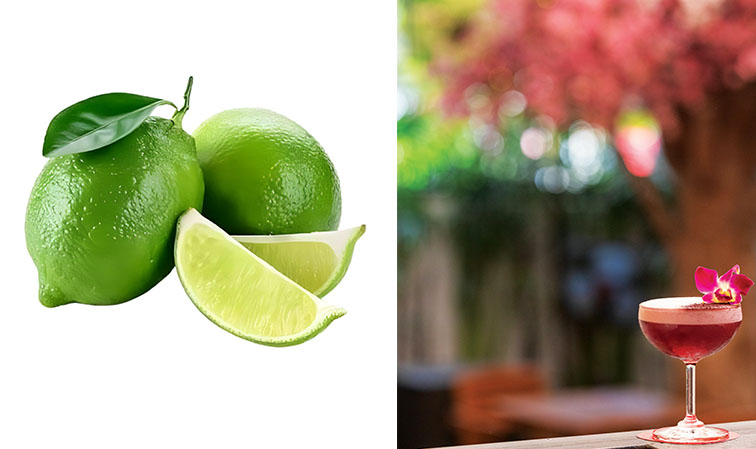
In many Bengali households, Sunday lunch has a certain pattern. There is rice, dal, perhaps a vegetable or fish, and all of it consumed with very little talk. The afternoon stretches out before you, and it is filled with the smell of Gondhoraj lebu. It is not a citrus flavor, nor is it an acid. It has a scent that fills the air before it reaches your plate.
For those who have known it since childhood, Gondhoraj is associated with regular days, school afternoons, and home holidays, meals that were never intended to be anything out of the ordinary. Now, as it finds its way into cocktails, it never really behaves any differently. Mostly, it is just a peel, very lightly expressed over a clear spirit, sometimes not even mentioned on the menu. You sense it without thinking. A few bartenders in Kolkata have begun to use it this way, present but not obtrusive.
As the heat increases, the Indian kitchen has always adjusted without being asked to. Food, drink, and mood change almost overnight. This is where ingredients like kokum and khus have always belonged.
Kokum in water and khus syrup mixed into cold water is a straightforward method to cool the body and calm it. This same reasoning is now making its way onto bar menus. At Firo Chennai or Toast and Tonic Bangalore, for instance, kokum appears without being softened or hidden. It retains its tartness, a slight sharpness, and its unmistakable identity.
Khus is even more discreet. It is often not the first thing you taste but the last thing you feel after the glass is empty. Dry, earthy, almost dusty, it is a reflection of how it has always been in the Indian kitchen. In cocktails, it never really takes center stage. It simply replaces something else, balances, and leaves a sense of calm in its wake.
Some flavors are not a part of the meal but of what happens next. Betel leaf is one such flavor, which comes up after the meal, when the conversations slow down, and people linger. The sweetness of meetha paan is slightly medicinal, aromatic, and lingers on. At M Bar Kitchen in Kolkata, a cocktail such as Paan Bahar uses betel leaf in this manner, not as a novelty ingredient but as a familiar after-meal flavor that lingers, identifiable without needing to be explained.
Jaggery is a part of the same experience. It is not the sweetness of dessert sugar but a sweetness that has been developed through heat, toil, and time.
When these flavors make an appearance in cocktails, they tend to make an appearance later in the evening, in glasses that are meant to be sipped, not gulped down. A spirit flavored with betel leaf. A dark drink flavored with jaggery instead of refined sugar. These are not cocktails that are meant to be gulped down; they are meant to be paused upon, much like the experiences they are derived from.
None of this feels new, as these ingredients never left. They were always in the kitchens, the backyards, and the daily lives that we never thought to document. Their use in cocktails feels less like innovation and more like recognition, a recognition that flavors do not need to be introduced if they already belong.
For bars and bartenders, this return is not about nostalgia. It is about recognizing that familiarity can be just as important as innovation, and that some flavors do not need to be explained to be understood.