










Once ruled by Singapore, Hong Kong and Tokyo, Asia’s cocktail map has expanded to include unlikely heroes – its smaller cities – where authenticity, identity and creativity now re-define excellence
There is something magical happening throughout Asia’s bars. If the editions of Asia’s 50 Best Bars and the World’s Best Bars in the past couple of years are to be analysed, it throws up a very interesting trend: consumers are drinking closer home, away from the traditional bastions of tier-1 metropolitan areas.
For much of the last decade, Asia’s cocktail conversation revolved around a familiar triangle: Singapore, Hong Kong and Tokyo. These cities defined what “good” looked like: precision, luxury, and imported spirits served with the polish of five-star hospitality.
If you wanted to be taken seriously as a mixologist, you worked there, trained under their masters, and hoped your bar might one day earn a spot on Asia’s 50 Best Bars – alongside theirs! But the story of the last few years is what’s happening outside that triangle.
From Bengaluru to Taichung, from Penang to Manila, from Ho Chi Minh to Nara, Asia’s smaller markets have quietly rewritten the script. They’re doing it with fewer resources, smaller teams, and ingredients their grandparents recognise. They’re not chasing validation anymore; they’re creating their own.
Regional Accents
This shift isn’t just geographic; it’s philosophical. For years, much of Asian bartending carried a colonial echo that the idea “good” meant Western, that true mastery came from London or New York. But, as more bartenders trained abroad and returned home, something shifted.
The focus moved from imitation to interpretation. Now, the region’s most exciting drinks don’t mimic the West. Instead, they taste like home. They use pandan and kokum, calamansi and cacao, rice spirits and spice ferments. They’re rooted in their ecosystems and expressed in their own accents.
In smaller cities, that creative freedom is amplified. With less pressure to please global tourists or follow aesthetic templates, bartenders experiment fearlessly. The results are bars that feel personal, not performative, and where creativity grows out of context, not competition.
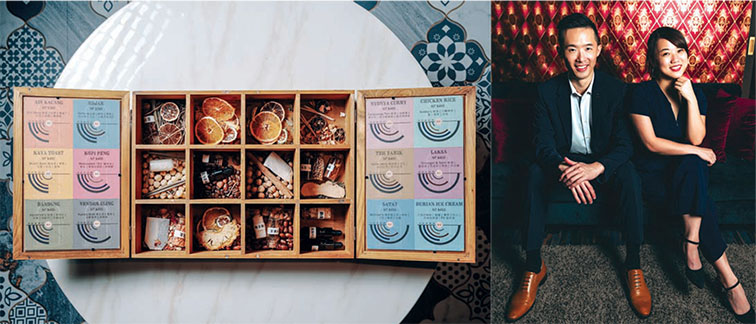
When Darren Lim’s bar, Vender, was announced as Taiwan’s best bar for 2 consecutive years – given its unique concept based on a vending machine with a focus on drinks inspired by Lim’s origins in Singapore – you’d perhaps look for it the capital city of Taipei.
In Taichung, Vender has a carved a niche for itself amongst its consumers who are now drinking closer home. Darren attributes this to two simple reasons: rising prices in the bigger cities and the fatigue with the whole ‘dress up, commute, line up’ routine.
‘The neighbourhood bar solves this problem. You can pop in wearing shorts and slippers, enjoy a serious drink without the ceremony and keep the evening casual,” Darren says.
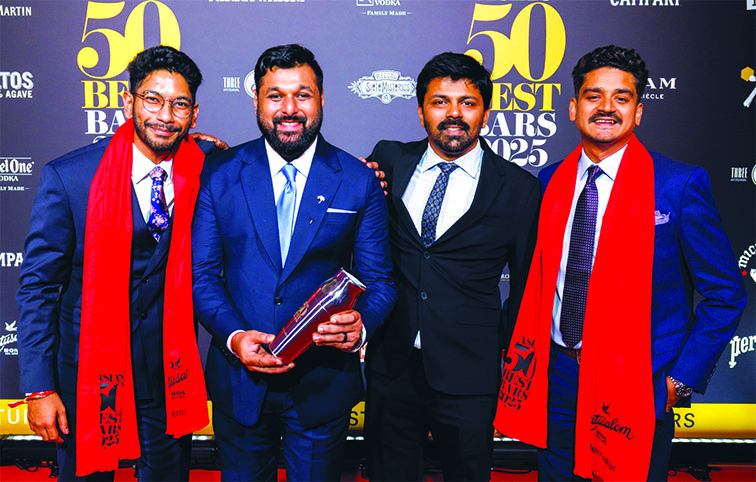
Pankaj Balachandran (second from left) of Boiler Maker in Goa says the shift from imitation to celebration is what changed the game.
Redefining Excellence
When Asia’s 50 Best Bars launched in 2016, excellence was defined by imported spirits, perfect technique, tight service choreography. It was an era of technical mastery. Today, excellence has a softer outline.
Now it’s about emotional hospitality, narrative, sustainability. It’s about menus that tell stories and flavours that connect with memory. A bar doesn’t need extensive interiors or an expensive rotovap to be world-class. It just needs a point of view.
This evolution matters because it’s changing who gets seen. A shack styled bar in Goa without air-conditioning, or a neighbourhood spot in Taichung that looks like a vending machine, are now destinations in their cities and countries. Creativity and sincerity have become equal currencies to capital and design.
Says Pankaj Balachandran of Boiler Maker in Goa, “Rather than asking ‘Are we fitting in with what’s happening in the West or even in the biggest cities of Asia?’ we focused on playing to our own strengths. That shift in mindset – from imitation to celebration – is what changed the game.”
The lists have evolved with that thinking. They’re no longer just measuring perfection — they’re rewarding personality. A bar in Shenzhen or Jakarta doesn’t have to mimic a global city to be seen as world-class; it just must sound like itself.
New Confidence
Award lists like 50 Best Bars are often criticised for being exclusive, but their deeper influence is catalytic. They don’t just reflect culture, they shape it. When a small bar in Kathmandu or Hiriketiya appears on the list, it sends ripples through the industry.
It tells investors that excellence isn’t limited to capital cities. It tells young bartenders that staying home can be as aspirational as leaving. And it tells global audiences that innovation can happen anywhere.
For Abhishek Tuladhar, whose bar Barc in Kathmandu was awarded the coveted Art of Hospitality Award at 50 Best Bars Asia this year (a first for any bar in South Asia) it is all about consistency in pushing a clear vision in creating a bar that feels world-class but unmistakably Nepali in its identity.
Recognition fuels confidence. Confidence attracts investment. Investment builds ecosystems. And before long, what was once “off the map” becomes a destination.
Emotional Evolution
There’s something quietly emotional about this transformation. Early on, bartenders spoke in the language of technique: balance, dilution, texture. Today, they speak in the language of emotion: memory, culture, belonging. A cocktail might recall a grandmother’s kitchen, a street-side dessert, or a harvest ritual.
Drinks aren’t just constructed anymore; they’re composed. And smaller markets, rich in cultural diversity and unburdened by convention, are proving especially adept at this kind of storytelling.
Emma Sleight, Head of Content at 50 Best Bars notes, “Bars in Asia are turning inwards for inspiration to drive cocktail programmes. Across Asia, bartenders are telling stories of their heritage and culture through drinks that are reminiscent of the flavours they grew up with and ingredients that are native to their land.”
This is what gives Asia’s emerging bar scene its heartbeat: authenticity as artistry.
Bigger Picture
Of course, there’s a shadow side to all this growth. The brighter the spotlight, the greater the temptation to perform for it! Some bars now design themselves for the list: conceptually tidy, visually striking, narratively convenient. It’s the new orthodoxy: bars that look authentic rather than live authentically.
Asia’s next challenge will be to preserve the sincerity of this movement and to keep its identity experimental, not formulaic. The best bars will be the ones that remain true to community, place and story, even as the world is watching.
The rise of smaller Asian markets isn’t just a hospitality story; it’s a cultural re-balancing. It marks the moment Asia stopped seeking validation and started defining its own taste.
The region’s next decade won’t be about chasing the capitals. It’ll be about cities and people that make the local universal. The best bars in Asia today don’t just pour drinks; they pour identity.


